Einigkeit und Recht und Freiheit für das deutsche Vaterland. So beginnt die deutsche Nationalhymne, über die ich Euch heute etwas erzählen möchte.
Lange Zeit hatte Deutschland keine eigene Hymne. Es gab verschiedene Lieder, die bei wichtigen Ereignissen gespielt oder gesungen wurden. 1922 einigte man sich auf eine neue Hymne: Das Lied der Deutschen. Der Text des Liedes stammt von August Heinrich Hoffmann von Fallersleben, es ist ein Gedicht von 1841. Heute heißt es auch das Deutschlandlied. Es hat drei Strophen. Auf slowgerman.com findet Ihr den gesamten Text.
Während der Nazizeit wurde nur noch die erste Strophe gesungen, die wir heute nicht mehr singen. 1949 suchte man eine Hymne für die neu gegründete Bundesrepublik Deutschland. Es wurde das Lied der Deutschen – allerdings die dritte Strophe. Die Hymne singen wir heute bei Fußballspielen und Staatsempfängen. Sonst sind die Deutschen eher vorsichtig mit patriotischen Liedern und Symbolen, anders als viele andere Länder. Die Musik der Hymne stammt übrigens von Joseph Haydn. Er komponierte das Kaiserquartett 1796/97.
Und wie sieht es mit der deutschen Flagge aus? Ihre Farben sind schwarz, gelb und rot. Wir sagen aber „Schwarz-Rot-Gold“ dazu. Wieso nun gerade diese Farben? Dazu gibt es eine schöne Legende, wer weiß, ob sie stimmt… Angeblich gehen die Farben auf das Jahr 1152 zurück. Damals wurde Barbarossa zum deutschen Kaiser gekrönt. Sein Weg führte ihn bei der Krönung über einen schwarz-rot-goldenen Teppich. Nach der Krönung wurde der Teppich in kleine Stücke geschnitten, als Souvenir für die Bürger. 1184 wurden diese drei Farben auf dem Reichstag als deutsche Farben festgehalten und das blieben sie auch die meiste Zeit. Es gab lediglich eine Pause, in der Schwarz-Weiß-Rot sich durchsetzte. Und natürlich auch die Zeit der Hakenkreuz-Fahne. Diese Fahne ist heute selbstverständlich verboten.
Seit der Gründung der Bundesrepublik Deutschland steht im Grundgesetz, dass die Bundesflagge schwarz-rot-gold ist.
Das Lied der Deutschen
Deutschland, Deutschland über alles, Über alles in der Welt, Wenn es stets zu Schutz und Trutze Brüderlich zusammenhält, Von der Maas bis an die Memel, Von der Etsch bis an den Belt – Deutschland, Deutschland über alles, Über alles in der Welt!
Deutsche Frauen, deutsche Treue, Deutscher Wein und deutscher Sang Sollen in der Welt behalten Ihren alten schönen Klang, Uns zu edler Tat begeistern Unser ganzes Leben lang – Deutsche Frauen, deutsche Treue, Deutscher Wein und deutscher Sang!
Einigkeit und Recht und Freiheit Für das deutsche Vaterland! Danach lasst uns alle streben Brüderlich mit Herz und Hand! Einigkeit und Recht und Freiheit Sind des Glückes Unterpfand – Blüh’ im Glanze dieses Glückes, Blühe, deutsches Vaterland!
Frühling, Sommer, Herbst und Winter – das sind die vier Jahreszeiten. Jetzt ist der Sommer vorbei und der Herbst beginnt. In Deutschland wird es wieder kälter. Die Tage werden kürzer. Es regnet häufiger und das Leben verlagert sich wieder nach drinnen.
Im Sommer verbringen wir so viel Zeit wie möglich draußen. Wir treffen uns mit Freunden im Biergarten, machen ein Picknick, fahren mit dem Fahrrad zur Arbeit und gehen im See schwimmen. Im Herbst machen wir es uns dann wieder im Haus gemütlich. Wir trinken Tee, zünden eine Kerze an oder machen ein Feuer im Kamin – sofern wir einen haben.
Für die Kinder bedeutet der Herbst das Ende der Sommerferien. Sechs Wochen lang mussten sie nicht in die Schule gehen – jetzt geht das neue Schuljahr los. Der Herbst hält aber auch einige Überraschungen parat: Bei einem schönen Spaziergang können die Kinder durch das raschelnde Laub laufen, Kastanien sammeln um damit etwas zu basteln oder besonders schön gefärbte Blätter sammeln, die sie dann als Deko trocknen können. Die Getreidefelder der Bauern sind jetzt abgeerntet, das Erntedankfest wird gefeiert. Dieses Jahr gab es leider keine gute Ernte, vor allem für die Obstbauern – im April hat es noch einmal geschneit und viele Blüten sind erfroren.
Im Herbst legen auch Eichhörnchen und Mäuse ihre Vorräte für den Winter an und sammeln eifrig Nüsse. Die Bäume lassen ihre Blätter fallen und besonders empfindliche Pflanzen wie zum Beispiel Zitronenbäumchen müssen wir jetzt ins Haus holen, damit sie nicht im Winter erfrieren.
In München beginnt im Herbst das Oktoberfest, dann ist für zwei Wochen wieder totales Chaos angesagt. Meistens ist während des Oktoberfests schönes Wetter, man nennt diese Zeit auch Altweibersommer. Warum? Ganz einfach: Weil die Spinnen jetzt ihre Fäden durch die Luft ziehen und diese aussehen wie lange weiße Haare. Also wie die Haare von alten Frauen. Das ist zumindest eine Erklärung, wie es zu diesem Namen gekommen sein könnte.
Let’s take a journey through time and explore German architecture. In ancient times, the Romans were in Germany—and, of course, they brought their architectural style with them. They built bridges, amphitheaters, and the Porta Nigra, a famous city gate in Trier. The Germanic tribes themselves lived in huts, so their architecture was rather modest.
During the Romanesque period, some 1,000 years ago, churches and monasteries were built at a rapid pace—Lübeck Cathedral and Speyer Cathedral, for example. Castles were also constructed during this time, such as Nuremberg Castle.
The Gothic style spread from France to Germany and also brought us many churches—Cologne Cathedral is a typical example. In the Gothic period, towers were built as high as possible, often in pairs, and the facades were richly decorated and pierced with windows. The structural load-bearing was shifted from the interior to the exterior as much as possible—so that there were few or no beams or supporting pillars inside. This made the interiors appear spacious and weightless. Of course, people didn’t live in Gothic churches—for them, there were primarily half-timbered houses, which are houses with a sturdy wooden frame filled with masonry.
The Orangery in Kassel: The Baroque palace was built starting in 1702, modeled after French designs.
The Italian Renaissance reached Germany in the 16th century, but never really took hold there. However, the Landshut City Residence was built by Italian master craftsmen, and St. Michael’s Church in Munich was also constructed in the Renaissance style.
The Baroque period began in Germany around 1650. It was inspired by the Sun King at Versailles. The Dresden Zwinger, the Frauenkirche, and the Würzburg Residence were built during this time. The Baroque era featured magnificent staircases; ceilings and walls were richly painted and decorated, and paintings and sculptures were integrated into the buildings—today, one would likely call this style ornate. The gardens of this period were laid out in strict geometric patterns.
The Fridericianum in Kassel: Germany's first purely Neoclassical building
After all that opulence, the builders probably felt the need for clean lines—they turned to antiquity for inspiration, allowing the gardens to grow wild and become more natural, and the buildings needed one thing above all else: columns. Here in Munich, there are several buildings from this period, such as the buildings on Königsplatz. Wilhelmshöhe Palace in Kassel is also an example of Classicism.
Starting in 1810, the Historicist style emerged; as the name suggests, it also looked to the past, reviving elements from antiquity, the Renaissance, the Gothic period, and the Baroque era. Berlin Cathedral and the Semper Opera House in Dresden are examples of this period.
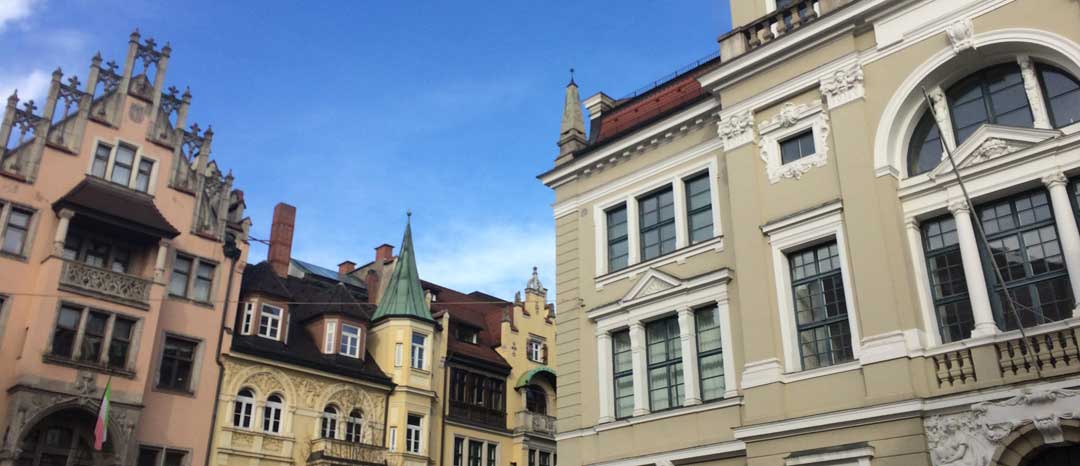
My favorite architectural period was very brief: Art Nouveau. This architectural style emerged around the turn of the 19th to the 20th century and was inspired by a magazine called *Die Jugend* that was published in Munich. I have lived in two Art Nouveau buildings, both over 100 years old. You see these buildings very often in Munich.
And then modernism arrived—industrial buildings and the Bauhaus, which I’ve already told you about. Cost-effective construction methods were developed, and residential buildings were designed with functionality in mind. Lines became cleaner; there were no more frills or ornamentation.
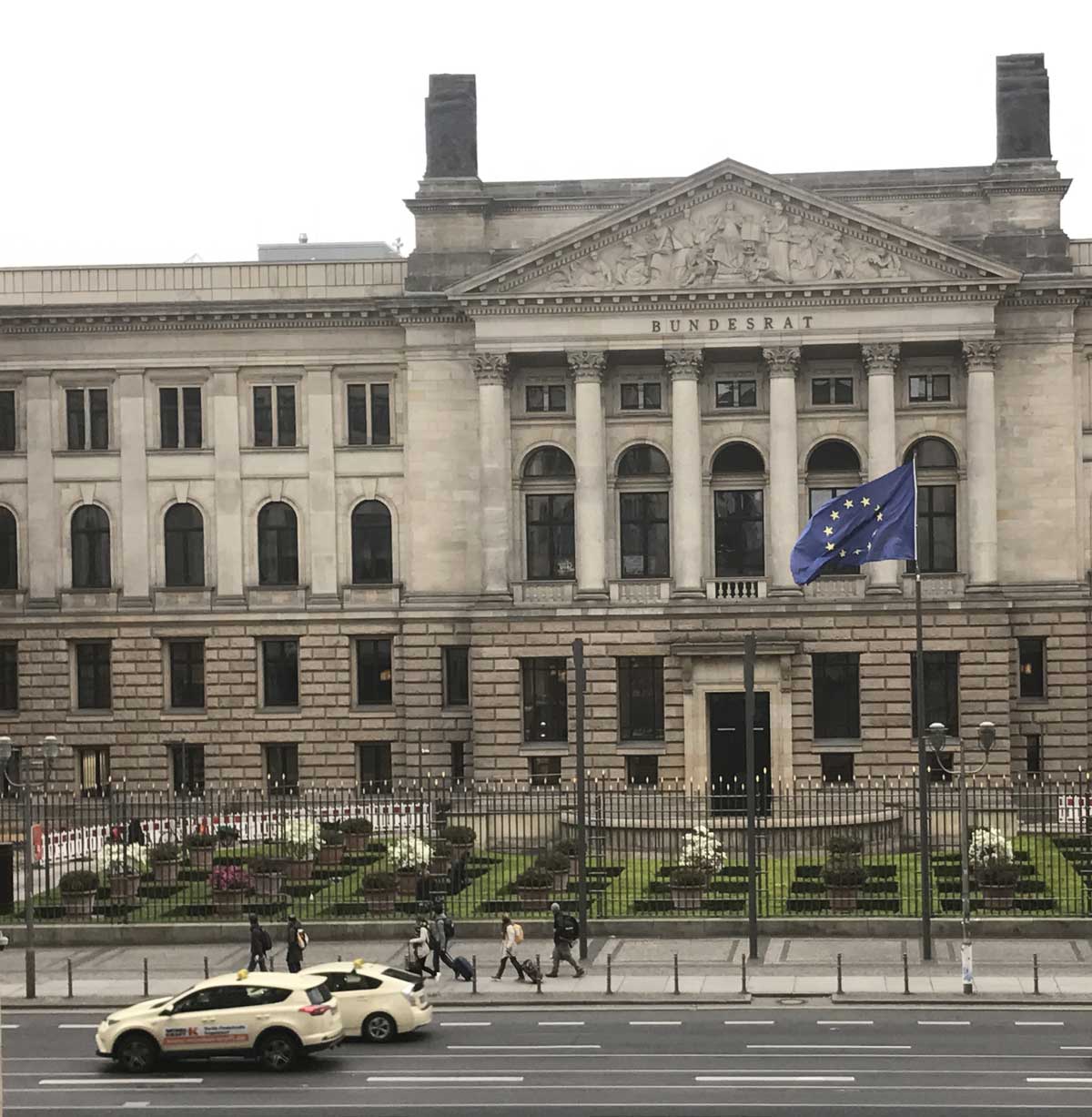
The Federal Council Building in Berlin: Neoclassical, built in 1904
But then the Nazis came along and threw the architecture of the time into disarray. They wanted to return to neoclassicism and built monumental, oversized concrete blocks that, unfortunately, still stand today. For example, the Zeppelin Grandstand in Nuremberg or the Haus der Kunst in Munich.
World War II destroyed many buildings—the cities were bombed, and they had to be rebuilt with limited funds and resources. As a result, many German cities today unfortunately have very ugly buildings that were constructed in the 1950s, 1960s, and 1970s.
And what about contemporary architecture? I’d say that in Germany, it’s characterized by lots of glass and clean lines. And some architects strive to build sustainably—they design buildings that use natural, locally sourced materials and, whenever possible, generate their own electricity or hot water using solar or photovoltaic panels.
This site uses cookies to remember your preferences. Is that okay? If so, please click "Accept All." By doing so, you accept all cookies on this site. However, you can also choose exactly which cookies you want to accept.
This website uses cookies to enhance your experience as you browse the site. Of these, the cookies categorized as necessary are stored in your browser because they are essential for the website to function properly. We also use third-party cookies to help us analyze and understand how you use this website. These cookies will be stored in your browser only with your consent. You also have the option to opt out of these cookies. However, opting out of some of these cookies may affect your browsing experience.
Essential cookies are absolutely necessary for the website to function properly. These cookies ensure the website’s basic functionality and security features, anonymously.
Cookie
Duration
Description
cookielawinfo-checkbox-analytics
11 months
This cookie is set by the GDPR Cookie Consent plugin. The cookie is used to store the user's consent for cookies in the "Analytics" category.
cookielawinfo-checkbox-functional
11 months
This cookie is set by GDPR Cookie Consent to record the user's consent for cookies in the "Functional" category.
cookielawinfo-checkbox-necessary
11 months
This cookie is set by the GDPR Cookie Consent plugin. It is used to store the user's consent for cookies in the "Necessary" category.
cookielawinfo-checkbox-others
11 months
This cookie is set by the GDPR Cookie Consent plugin. The cookie is used to store the user's consent for cookies in the "Other" category.
cookielawinfo-checkbox-performance
11 months
This cookie is set by the GDPR Cookie Consent plugin. The cookie is used to store the user's consent for cookies in the "Performance" category.
viewed_cookie_policy
11 months
This cookie is set by the GDPR Cookie Consent plugin and is used to store whether or not the user has consented to the use of cookies. It does not store any personal data.
Functional cookies help enable certain features, such as sharing website content on social media platforms, collecting feedback, and other third-party features.
Performance cookies are used to understand and analyze the website's key performance metrics, which helps us provide a better user experience for visitors.
Analytical cookies are used to understand how visitors interact with the website. These cookies help provide information on metrics such as the number of visitors, bounce rate, traffic source, etc.
Advertising cookies are used to show visitors relevant ads and marketing campaigns. These cookies track visitors across websites and collect information to deliver personalized ads.